Kevlar Thread in Briefcases – Overkill or Smart Engineering?
For the engineers and frequent travelers who appreciate function first, form second, the question of using Kevlar thread in briefcases is more than a style debate—it’s a materials science and durability challenge. In this post, we’ll break down what Kevlar stitching means for briefcases, why it might be the go-to solution for reinforced corners and high-stress seams, and how top-tier manufacturers like CivilDigital, Von Baer, and YKK are leaning into rigorous durability testing and craftsmanship rooted in numbers, not buzzwords.
Engineer’s View: Function Over Fashion
Engineers are the ultimate skeptics when it comes to product claims. They want measurable precision and tolerances, not vague marketing fluff. When it comes to briefcases, the first question they ask is, “How long will this last under mechanical stress?” It’s all about durability stitching—seams that won’t fail after repeated daily use, reinforced corners that resist abrasion and impact, and https://smoothdecorator.com/how-to-choose-a-bag-that-survives-1-2-meter-drops/ hardware that performs without fuss.
Let’s face it, a briefcase is a small airframe: seams are structural joints; leather panels are stressed skins; zippers act as access hatches; and the hardware must survive thousands of cycles. Calling a product “premium” doesn’t cut it unless the materials and construction can be proven under controlled testing.
Kevlar Thread: The Numbers Behind It
Kevlar thread is a synthetic aramid fiber known for its exceptional tensile strength—about five times stronger than steel on an equal-weight basis. In briefcase construction, Kevlar is primarily used in stitching high-stress seams and reinforced corners. Let’s look at some numbers:
Property Kevlar Thread Standard Nylon Thread Cotton Thread Tensile Strength (MPa) 3000 600 400 Elongation at Break (%) 2.8 15-25 10-15 UV Resistance Good Fair Poor Abrasion Resistance Excellent Moderate LowKevlar’s low elongation means seams hold tight without stretching or loosening, a vital property for briefcases loaded with laptops and documents. Its superior abrasion resistance extends life at briefcase corners and zipper lines, where edges commonly wear through ordinary threads.
Durability Stitching in High-Stress Zones
Critical stress points on briefcases include:
- Reinforced corners: Constant friction against desks, car doors, and airport conveyor belts requires threaded seams with high abrasion resistance.
- High-stress seams: Seams around handles, shoulder straps, and main compartments face repeated tension cycles.
- Zipper stitching: The zipper line is one of the most failure-prone areas without properly engineered thread and stitch patterns.
Companies like CivilDigital have leveraged Kevlar thread to specifically address these points. Their engineers document cycle counts exceeding 20,000 zipper openings and closings without degradation—a crucial figure demonstrated in lab durability testing setups.
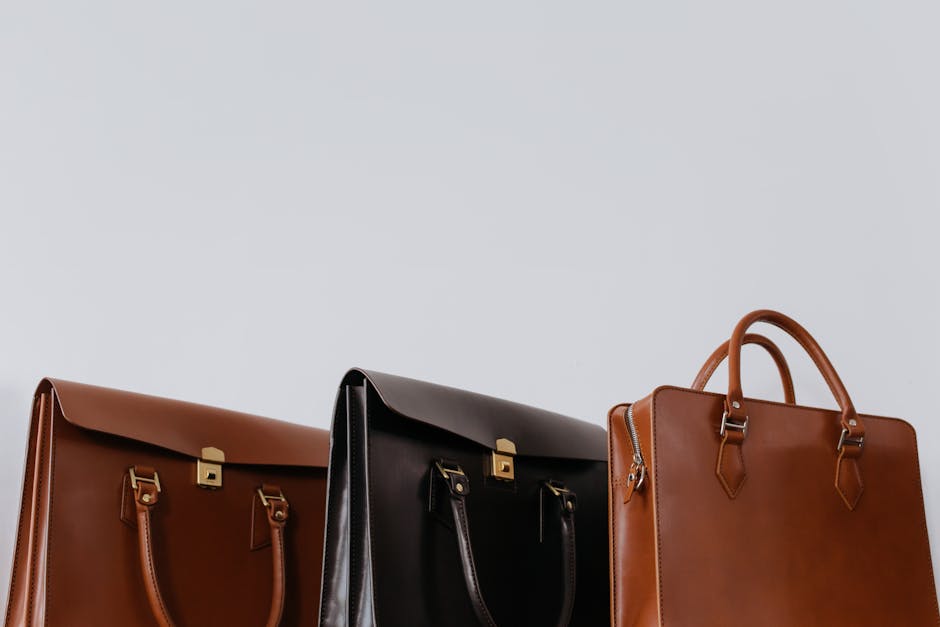
Materials Science Approach: Leather and Hardware Specs
Kevlar’s strength has to pair well with the rest of the bag torx fasteners hardware materials for optimal performance. For example, Von Baer employs certified full-grain vegetable-tanned Cuoio Superiore leather from Tuscany—the home of high-end leather production since 1961. This leather's tight grain and firm tensile strength complement Kevlar stitching by providing a stable, low-stretch substrate that preserves seam integrity.
The quality of the sewing thread only works if matched with premium hardware. That’s where YKK comes in, the gold standard in zippers worldwide. YKK zippers with precise coil tolerances and corrosion-resistant sliders maintain operational precision, ensuring Kevlar-sewn seams aren’t wasted by zipper failure.
Why Vegetable-Tanned leather matters here
Vegetable-tanning produces a leather that thickens over time but ironically becomes more flexible and resistant to cracking. This material’s low shear properties reduce stress on thread during moving parts of a briefcase. Cuoio Superiore leather’s traditional tanning process has been optimized for over six decades, which artisans and engineers at Von Baer rely upon to pair with high-tech stitching methods.

Durability Testing and Cycle Counts: Proof in Numbers
Rigor comes down to measurable testing. Outfits like CivilDigital and Von Baer implement multi-stage durability trials:
- Cycle testing: Opening/closing the zipper repeatedly (20K+ times), flexing seams under 10kg loads, and rubbing reinforced corners against abrasive surfaces.
- Environmental exposure: UV light exposure and humidity cycling to simulate years of packing and travel conditions.
- Load testing: Applying downward forces of 30-50 lbs at handle seams to replicate real-world carry loads.
Kevlar threads consistently outperform nylon and polyester in these tests, with less seam elongation, fewer broken stitches, and superior corner retention after repeated wear.
Is Kevlar Thread Overkill?
It depends on your use case. For the executive landing at three airports a week, lugging sensitive gear and heavy documents, Kevlar thread offers a measurable, data-backed durability margin. For the casual user, it could be more than necessary and add minimal weight or cost—but no functional benefit.
Given the lightweight and compact profile of Kevlar strands relative to their strength, the engineering consensus from brands like CivilDigital and Von Baer is: it’s smart, not overkill, to reinforce high-wear stitching points with Kevlar. Paired with superior vegetable-tanned leather and YKK hardware, the result is a product designed with measurable precision, not just for looks.
Conclusion: Smart Engineering Meets Timeless Craft
Kevlar thread in briefcases is a technical enhancement that addresses the real-world stresses engineered into these carry items. It’s more than just hype; it’s a materials science approach driven by measured tensile strength, abrasion resistance, and low elasticity. When combined with trusted leather production methods like Tuscany’s certified Cuoio Superiore, and industry-leading hardware from YKK, you get a briefcase built like a cockpit control panel—precise, durable, and ready for action.
So next time you spot a briefcase with Kevlar reinforcements, think less about "overkill," and more about smart functional design that engineers can respect—and that can actually survive the daily cycles of demanding users.